Why a Ledger Gets Harder to Continue After One Missing Entry
When one entry is missing, the first thing that breaks is often not the monthly report. It is your trust in the ledger.
You know it is already inaccurate. The next time you open it, adding that one entry is not enough. Did you miss others before it? Did the same purchase appear once in each of two channels? Was the original expense reversed after a refund arrived? If any of those questions remains unanswered, continuing feels like adding numbers to a crooked table.
That is where many people stop. They still want a record of their spending, but they do not want to spend more time on a result they no longer trust.
A recent real reconciliation covered four months, several payment and banking channels, and hundreds of existing records. There was no assumption about where the problems would be. The comparison surfaced omissions, duplicates, refunds, and old-data issues:
- Some expenses appeared on statements but not in the ledger.
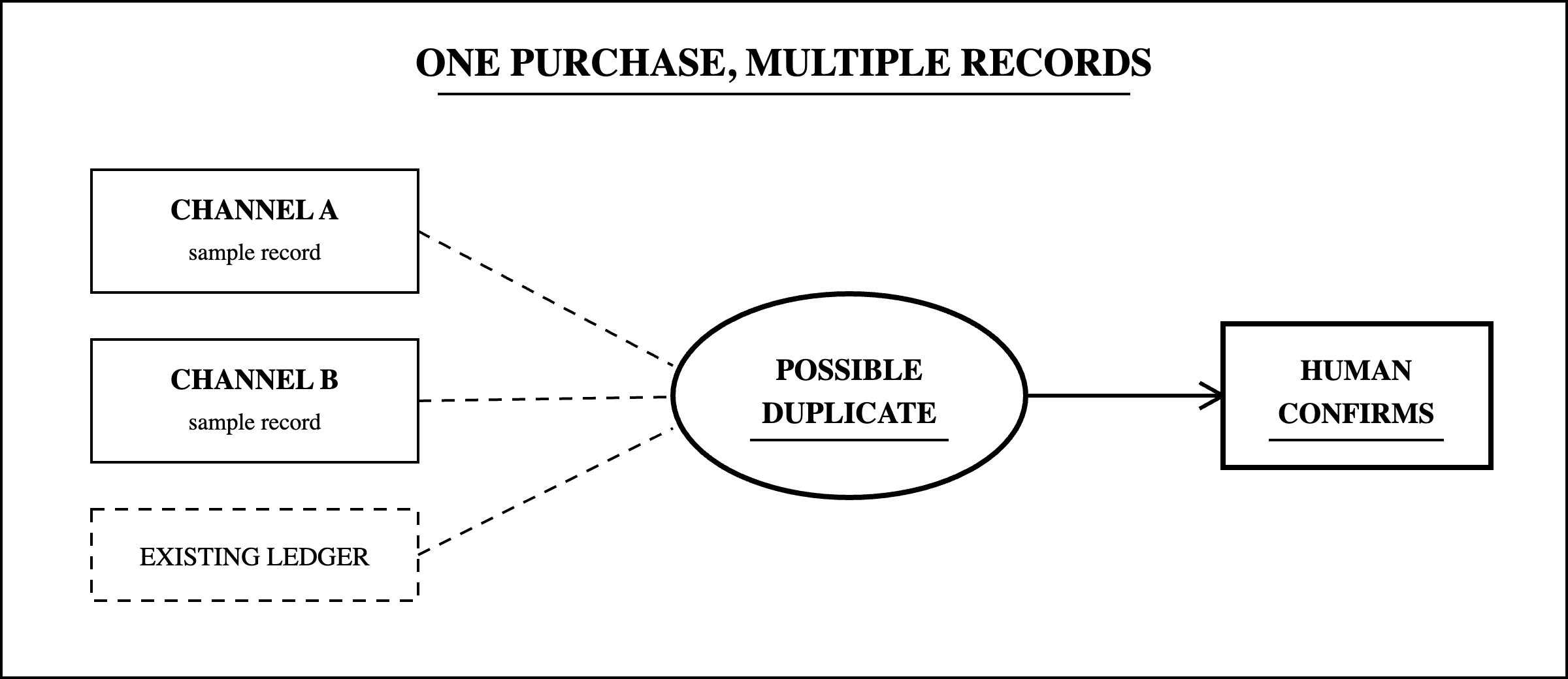
- Some purchases left a record in more than one channel.
- Some recorded expenses were later refunded in full but remained in the totals.
- Some old records had no date, so monthly reports could not see them.
Memory is a poor way to reconstruct any of these. Refunds and undated old records are especially difficult because they do not look like errors. They quietly change the result.
Reconcile First, Then Change the Ledger
The agent did not read the statements and immediately change the data.
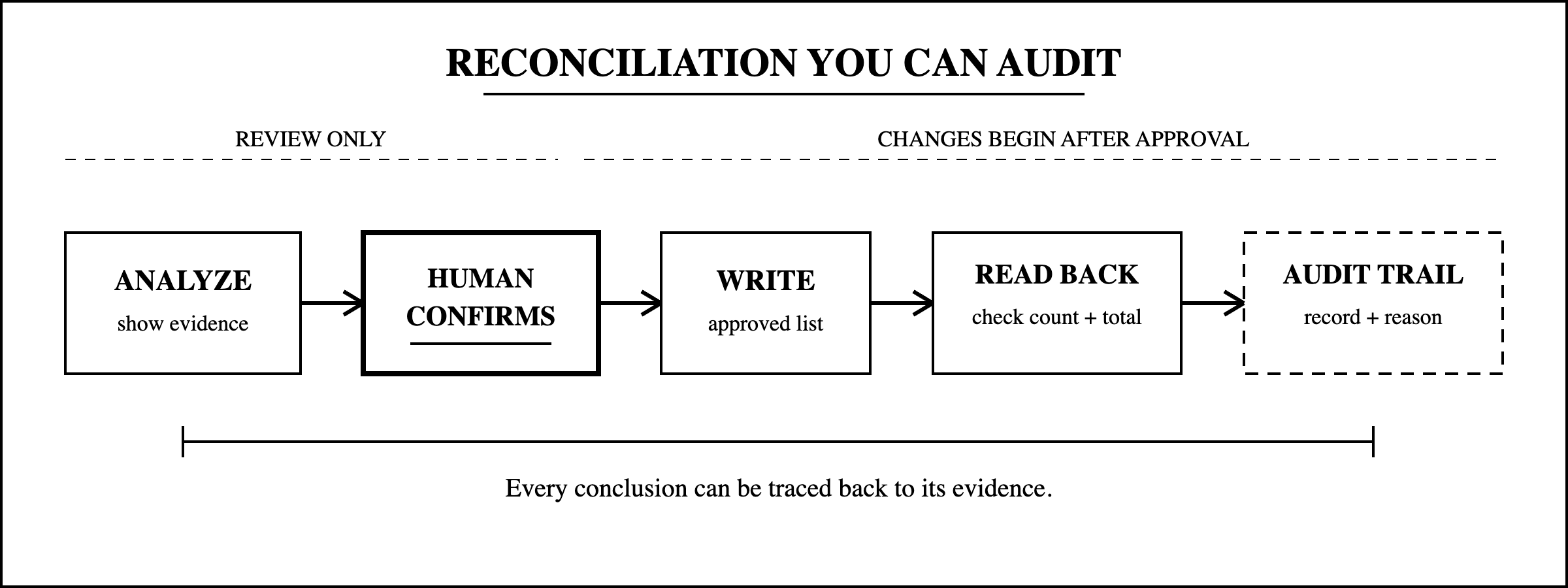
It first compared the statements with the existing records and produced an analysis: confirmed omissions, possible cross-channel duplicates, possible refunds, and cases that required a decision. At this stage, it presented evidence without writing or deleting anything.
The human supplied the judgment. Whether a transfer counts as spending, how a refund should be classified, and which of two duplicate records should remain all depend on the owner's accounting rules. The agent wrote and corrected records only after the proposed treatment was approved.
Writing was not the end. It read the ledger back and checked the resulting count and total against the approved list. For every deduplication or deletion, it retained the record identifier, the reason, and the outcome. A conclusion could be traced back to the original record, and the write itself could be checked for mistakes.
Auditability matters more than a claim that the work was automatic. If automation says only, “I recorded it for you,” the person still does not know what it missed or merged. Analysis first, approval before writing, and a read-back afterward make the work safe to delegate.
A Missing Entry No Longer Means Starting Over
The ledger does not require a perfect daily habit. At the end of the month, the agent can compare statements from different sources with the existing records and surface omissions. Forgetting one entry does not invalidate everything recorded before it.
Duplicates do not have to be guessed by eye either. Similar times, amounts, and descriptions are only clues. Uncertain matches are listed for a human decision instead of being merged silently.
The person's work is reduced to the few places that require judgment: defining the rules, reviewing evidence, and confirming the treatment. The agent handles the statement-by-statement comparison, cross-checking, data entry, and read-back.
When a reconciliation can show what it inspected, what it proposed changing, and what it changed, a missing entry becomes one issue to resolve instead of a reason to abandon the entire ledger.